What Is a Palatal Expander and How Does it Work?
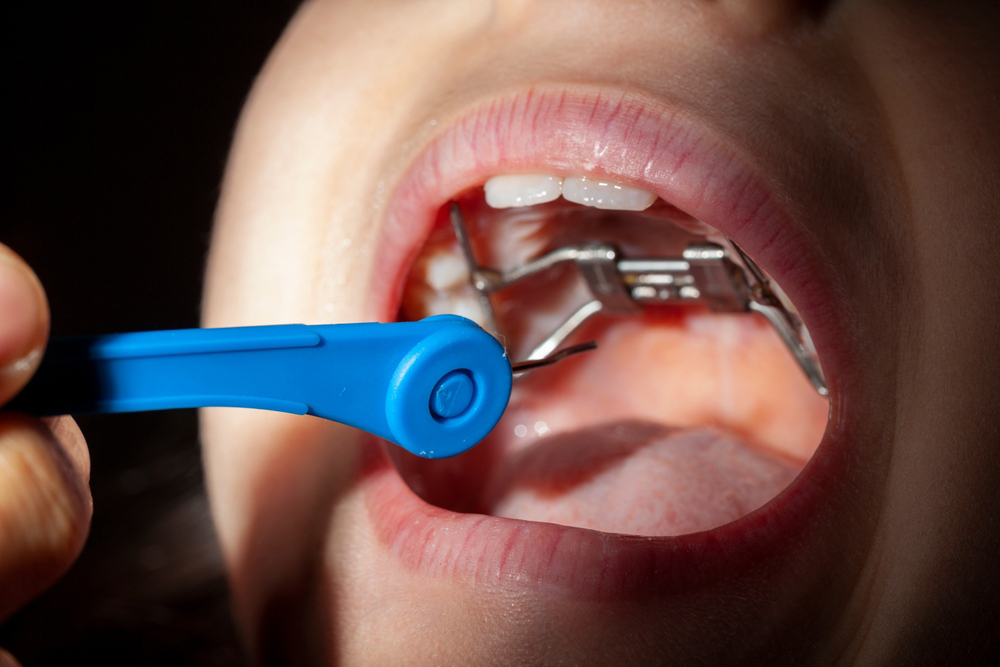
A palatal expander is often used in orthodontics as a great way to achieve better alignment between the top and bottom teeth. Many orthodontists recommend it for children before a teeth straightening procedure. It is helpful to know what exactly a palatal expander is and what to expect during the process before beginning treatment. The following is a complete overview of the purpose of a palatal expander and what to expect during treatment.
An overview of a palatal expander
A palatal expander is commonly used in orthodontics to widen a patient's upper jaw. They are typically provided to younger patients whose jaw is easy to expand. Maxillary expansion is often used to adjust malocclusions, such as crossbites, overbites, and underbites. However, patients may also use it to address tooth crowding and impacted teeth.
The main purpose of palatal expander treatment is to achieve an even position of the upper and lower teeth while the mouth is closed. The non-invasive treatment comes in four forms: removable, the Hyrax rapid, the Quad helix, and the Haas.
Different types of palatal expanders
Orthodontists recommend the removable palate expander for patients with minimal to moderate corrections needed. While they can be removed for certain activities such as eating, oral hygiene (brushing, flossing, and rinsing), and playing contact sports, patients are expected to wear them for a minimum of 22 hours daily.
The Hyrax rapid is a custom-made palatal expander that provides a rapid and controlled method of expanding the maxillary arch. This expander has two parts: a base plate and an anterior bar. The base plate is placed on the palate, with the anterior bar extending over the alveolar ridge. The anterior bar is then moved forward by turning a screw that protrudes from the base plate. This causes the anterior bar to push against the alveolar ridge, creating an expanding force on the maxillary arch.
The Quad helix palatal expander is made of stainless steel and has four prongs inserted into the mouth's roof. The prongs expand outward, stretching the tissue around them. The quad helix palate expander treats underdeveloped jaws in children with cleft palates or other conditions causing facial deformities. The quad helix palate expander is placed in the mouth during surgery, where it will stay for several months, allowing time for new bone growth. Once the bone has healed sufficiently, the expansion stops, and the device is removed.
The Haas palate expander has three parts: the anterior screw, the posterior screw, and the spring. The anterior screw pushes against the patient's upper teeth, while the posterior screw pushes against their lower teeth. The spring will attach to both screws and push them together from either side.
How does a palatal expander work?
A common misconception is that palatal expanders are somehow painful or invasive in any manner, which could not be farther from the truth. The removable palate expander only needs to be adjusted twice a week instead of daily, like its counterparts.
The way the Hyrax rapid expander works is simple: the jaw is gradually moved to a wider position. Then, the device attaches to several teeth on each side of the back of the mouth. Essentially, this palatal expander is two separate parts that conjoin in the middle. The device is continually adjusted until the upper jaw reaches an ideal position. Then, the palatal expander is left for several weeks to stabilize the position.
Patients using the Haas palatal expander will need to make adjustments daily. To adjust this palatal expander, the orthodontist will give patients a key and step-by-step instructions on how to do so and when. The entire process for each type typically takes between three to six months in most instances, depending on the state of the patient's oral condition.
Benefits of a palatal expander
There are many cosmetic and oral health benefits associated with a palatal expander. To fully understand the benefits, it is important to understand the purpose and end result: to widen the upper jaw and achieve a better bite position overall. A wider upper jaw allows more room for teeth to shift, making teeth straightening through braces and clear aligners more effective. It is often a solution for crossbite as well, which makes many looks better, function more effectively while eating, and improve oral health.
When is a palatal expander necessary?
There are many reasons why an orthodontist might recommend a palatal expander to their patient. These include addressing crossbite and other bite complications, tooth crowding, crooked teeth, and impacted teeth. Quite simply, a palatal expander might be beneficial if a child does not have enough room in their mouth for teeth to come through or naturally shift to a straight position. A palatal expander is ideal for younger children when used in orthodontics. An orthodontist may recommend it before teeth straightening.
Talk to an orthodontist about treatment
We hope you have found this article beneficial. If you are interested in learning more about how a specific palatal expander works or determining if and which will be the most effective option for your oral condition, we invite you to contact our office today at (703) 391-8800. Our orthodontist can explain the entire process.
Request an appointment here: https://www.orthodonticprecision.com or call Precision Orthodontics & Pediatric Dentistry at (703) 391-8800 for an appointment in our Reston office.
Check out what others are saying about our services on Yelp: Read our Yelp reviews.
Recent Posts
Maybe you want to straighten your teeth, but you are looking for a more discreet method like Invisalign®. These aligners have exploded in popularity because they are a less obvious way to correct misaligned teeth. Many people with alignment issues who were unsure about braces have now embraced Invisalign. You might be on the fence…
Adult orthodontics is not only for teenagers. More adults choose orthodontic treatment to straighten their teeth, improve their bite, and feel better about their smile. While clear aligners get most of the attention, metal braces remain a practical and reliable option in adult orthodontic treatment. Modern braces are smaller and less bulky than older versions…
FastBraces® can help some patients straighten their teeth more quickly than traditional metal braces or even ceramic braces. This approach is designed to move the tooth crown and root more efficiently from the very start of treatment. A dental provider can explain how FastBraces works, whether it is a good fit for the patient’s case,…
You may know that Invisalign® is different than traditional braces, but you may not know all the reasons why. Both Invisalign and traditional braces straighten your teeth and correct other issues, but in very different ways. For many, Invisalign aligners are a great choice to straighten the teeth without visible brackets and wires. There are…