The Role of Retainers in Orthodontic Treatment: What You Should Know
Orthodontic treatment covers a broad range of potential remedies and solutions, and retainers are common among them. People who have already had braces and those who have not may both be good candidates for these corrective devices.
Retainers can serve many functions, from maintaining the current spacing and positions of the teeth to moving them slightly to achieve better orthodontic results. If you are wondering whether a retainer is right for you, the first thing that you should do is understand how it works and why an orthodontist may use it.
How retainers work in orthodontic treatment
While orthodontists rely on retainers for several reasons, most people will only encounter them after they have completed a teeth straightening regimen. Once the teeth are in their new positions, retainers help prevent that progress from being lost.
The basics of retainers
Retainers are custom-fitted devices that the orthodontist will make for the patient based on a mold of their mouth. The mold uses specialized clay that the patient will bite into to create a replica of their bite. However, with modern technology, many dental offices can get laser readings of the patient's mouth to develop scans from which highly accurate molds can also be made.
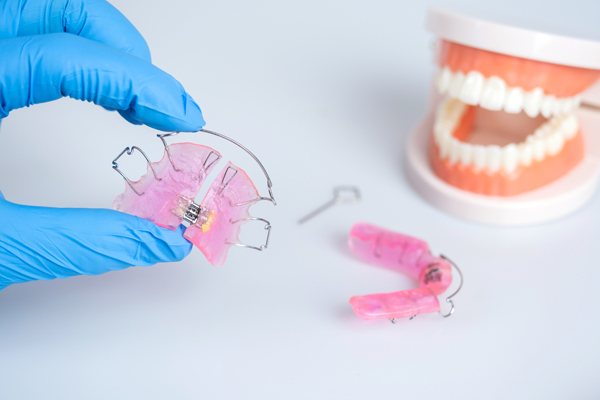
Using the mold, a professional will craft a retainer that “clicks” into the mouth around the teeth. It should not hurt and should be freely removable while remaining in place well enough to not slip out accidentally.
Some retainers are affixed directly to the teeth, but most are meant to be removed. These should be washed regularly, and the orthodontist typically tells the patients to wear their retainers every night.
Why retainers make a difference
Retainers are a vital part of the tooth straightening process. After braces or aligners bring the teeth into their ideal positions, they can tend to shift back if they do not remain under pressure. After all, that is how they naturally got their original, misaligned positions in the first place!
A retainer stops this movement so the patient can continue to enjoy their new smile. Once the teeth have settled after straightening treatment or bite restructuring, patients will not usually need to stick with straightening treatments 24/7. Instead, they will usually wear their retainer only at night and take it out during the day. This is enough time to prevent the teeth from returning to their old positions.
In other situations, a retainer can be a means of addressing specific issues, such as speech impediments. However, the exact application will depend on the patient.
How to keep retainers working
Retainers tend to be easy to care for but still need regular attention to ensure that they last for as long as possible. Patients should not eat with a removable retainer, for example. That said, it will still need to be brushed or cleaned. The orthodontist can recommend a cleaning solution or routine depending on what the retainer is made of; some retainers will scratch under regular brushing.
For permanently installed retainers, their care is similar to that of braces. Be sure to thoroughly clean underneath the wires and around the brackets. Other people will not be able to see these retainers because they are placed on the backs of the teeth. Patients can use a mirror when brushing in order to clearly see this normally hidden area.
If something happens to a retainer, like a piece comes loose or it is causing pain or rubbing, the patient should speak to the orthodontist. They can provide fixes or make other alterations so the device is more comfortable. Never attempt to use denture repair glue or other materials to repair a retainer. This could threaten the results achieved from the original straightening process.
Explore retainer options for orthodontic treatment
Retainers are frequently used as part of orthodontic treatment because they are helpful, easy to use, and simple to care for. However, the best way to ensure that your retainer lasts as long as possible is to follow your orthodontist’s instructions. If you do not want to lose the progress that you have made in your orthodontic journey, wear your retainer as instructed, and try not to skip days.
If you are still not sure whether a retainer is right for you or if you are experiencing issues with your retainer, do not hesitate to reach out. We would be happy to answer your questions and provide guidance so your retainer experience is as comfortable as possible.
Request an appointment here: https://www.orthodonticprecision.com or call Precision Orthodontics & Pediatric Dentistry at (703) 391-8800 for an appointment in our Reston office.
Check out what others are saying about our services on Yelp: Read our Yelp reviews.
Recent Posts
Maybe you want to straighten your teeth, but you are looking for a more discreet method like Invisalign®. These aligners have exploded in popularity because they are a less obvious way to correct misaligned teeth. Many people with alignment issues who were unsure about braces have now embraced Invisalign. You might be on the fence…
Adult orthodontics is not only for teenagers. More adults choose orthodontic treatment to straighten their teeth, improve their bite, and feel better about their smile. While clear aligners get most of the attention, metal braces remain a practical and reliable option in adult orthodontic treatment. Modern braces are smaller and less bulky than older versions…
FastBraces® can help some patients straighten their teeth more quickly than traditional metal braces or even ceramic braces. This approach is designed to move the tooth crown and root more efficiently from the very start of treatment. A dental provider can explain how FastBraces works, whether it is a good fit for the patient’s case,…
You may know that Invisalign® is different than traditional braces, but you may not know all the reasons why. Both Invisalign and traditional braces straighten your teeth and correct other issues, but in very different ways. For many, Invisalign aligners are a great choice to straighten the teeth without visible brackets and wires. There are…