What to Expect at Your Child’s First Visit to a Pediatric Orthodontist
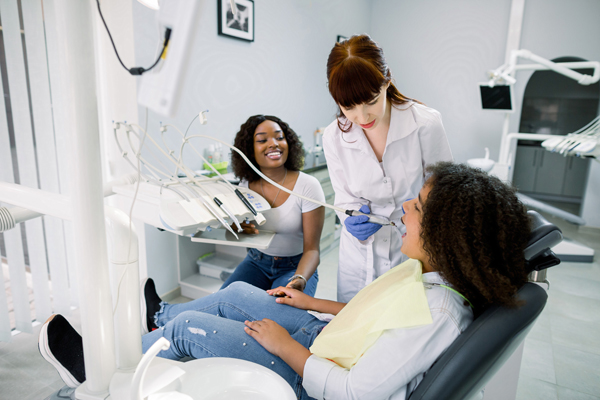
A pediatric orthodontist specializes in treating dental misalignments in children and teens. Your child's first visit primarily aims to understand their dental growth patterns, including jawbones and teeth. The included assessments and steps allow the orthodontist to detect issues that can impact their overall development and provide suitable treatment.
The role of a pediatric orthodontist
A pediatric orthodontist is a specialist who diagnoses and treats irregularities in children and teens caused by dental misalignments. Their services aim to correct problems specifically in these areas, such as overbites, underbites, and misaligned jaws. While they are beneficial for improving oral and facial aesthetics, the pediatric orthodontist primarily aims to ensure proper oral function and long-term health.
Typically, pediatric or general dentists recommend parents consult these specialists. However, the American Association of Orthodontists, or AAO, recommends all children have their first visit no later than age seven.
Preparing for the appointment
A small amount of preparation is necessary for parents and children leading up to the appointment. Considering this is the child's first visit with a pediatric orthodontist and likely the first time in the practice, parents should ensure they have the necessary information regarding their insurance provider. If parents are unsure whether a practice accepts their specific insurance, call the provider to ensure the practice is within their network, what services they cover, and what percentage of the service they cover. Parents can also call the practice beforehand and confirm if their insurance provider is accepted. Additionally, parents should make room in their and their children's schedules to undergo the appointment for approximately 45 minutes to an hour.
Children need to ensure they properly brush and floss their teeth. Further, sometimes children may have aspects about their smile or bite that they are unhappy with or are problematic; however, they may not want to express them to total strangers. Therefore, it may be helpful for parents to better understand their child's silent concerns, if any, prior to the appointment so they can better communicate them with the pediatric orthodontist.
Determining an effective treatment option
During the appointment, patients will undergo:
- X-rays. Patients will stand in front of an X-ray machine while it takes images at various angles to check the position and discover teeth that may not have erupted yet.
- Photographs. The orthodontist's team will take front-and-side images of the child's face to evaluate their facial symmetry.
- Impressions or digital scans. To garner a better view of patients' bites, the orthodontist's team will either have them bite down on a mold or take 3D digital scans.
After acquiring images, the patient will be led to a room where the pediatric orthodontist can perform a painless physical examination. They will check the general health of the gums and teeth to ensure no treatment needs to be performed before starting orthodontics.
Finally, the pediatric orthodontist will discuss their findings with the parent, reviewing the most effective option for the child. This is the time for parents and children to ask as many questions as possible. The orthodontist will review the pros and cons of each recommendation and explain their processes.
Common pediatric orthodontic issues
Some dental issues are more common in children than others, while others may be genetic. Regardless, with the help of the aforementioned tools, the pediatric orthodontist can detect a multitude of issues. The most common ones are crowding, crossbites, spacing issues, overbites, and underbites. These issues can start small but worsen as the child grows, and the jawbone develops, often changing structure. No matter what condition the orthodontics detects and its severity, parents will walk away with a treatment recommendation.
Common services from a pediatric orthodontist
Recommended services may depend on the severity of the condition and whether it affects the teeth and jawbone or just the teeth. Common pediatric orthodontic services include:
- Braces. Metal or ceramic wires and brackets that are fixed to the teeth.
- Clear aligner. Clear, custom trays comprising medical-grade plastic that the child must wear at least 22 hours a day.
- Palate expander. An appliance affixed to the roof of the mouth that gradually widens both halves of the upper jawbone.
Note that some conditions can be far too severe for a pediatric orthodontist to treat solely with the above appliances. Therefore, they may recommend oral surgery before revisiting an oral appliance.
Schedule your child's consultation
Your child's first visit to a pediatric orthodontist is vital in ensuring proper oral development, which affects several areas of their overall development. If your child needs orthodontic treatment or they have never had a visit, contact Precision Orthodontics & Pediatric Dentistry. We are located in Reston and serve residents in and around the area.
Request an appointment here: https://www.orthodonticprecision.com or call Precision Orthodontics & Pediatric Dentistry at (703) 391-8800 for an appointment in our Reston office.
Check out what others are saying about our dental services on Yelp: Orthodontics for Children in Reston, VA.
Recent Posts
Invisalign® aligners can effectively correct many oral alignment issues like crooked, misaligned, or protruding teeth. Invisalign is a popular alternative to metal braces and uses plastic aligner trays to straighten teeth. These clear plastic trays (aligners) are custom-made by an orthodontist to fit tightly over the teeth and gradually shift crooked teeth into the correct…
Invisalign® is a great option for patients who have issues with their teeth alignment. Read on to learn about dietary restrictions while undergoing Invisalign treatment. The aligner trays are removable, which means patients can take them out when it is time to eat or brush their teeth. It is also easy to brush your teeth…
Undergoing Invisalign® treatment can be exciting. This treatment will not only improve your oral health but also your well-being. Read on to learn about the importance of an uninterrupted treatment routine. Patients need to adhere to the treatment guidelines and ensure that the routine goes undisrupted.By opting for Invisalign, the patient is committing to orthodontic…
Invisalign® is a popular alternative to traditional braces. Read on to learn some tips for getting the best results out of your Invisalign treatment. With Invisalign, patients can wear their aligner trays in public without worrying about their appearance. In addition, it is much easier to clean the teeth since the aligners are removable, and…