The Role of Pediatric Dental X-Rays in Preventing Cavities in Children
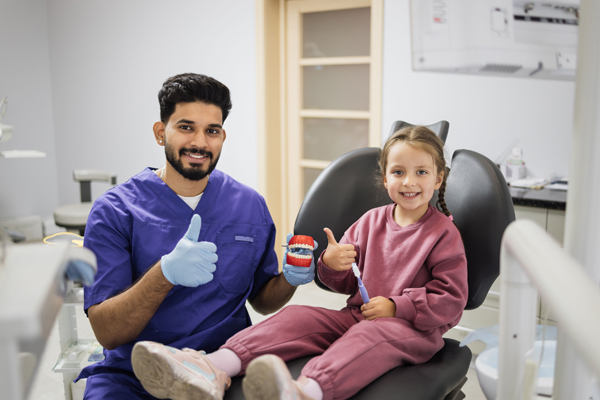
Pediatric dental X-rays play a significant role in your child’s oral health. The pediatric dentist will order this diagnostic imaging from time to time. The X-rays show what is happening underneath the gumline. Here are the details about the role of pediatric dental X-rays in keeping cavities at bay.
The purpose of X-rays
Statistics show that 90% of adults at least 20 years old have more than one cavity. Some of these cavities may have started in childhood. A pediatric dentist uses this type of imaging to determine the status of the child’s oral health. The scans provide a complete image of the jawbone, soft tissues, and dental structure. Providing a detailed diagnosis of the cavities is then possible.
Detecting cavities
Research shows that bad bacteria in the mouth cause cavities. These microorganisms eat the sugars that remain in the mouth after a person eats or drinks. In doing so, bacteria produce acids that erode the enamel layer of the teeth. The acids create holes in the teeth. Cavities may start as tiny and almost invisible at first. But over time, these holes deepen and reach the more sensitive part of the tooth.
Using pediatric dental X-rays to detect cavities
Dental X-rays are useful in locating cavities in specific areas of the teeth. Cavities the dentist cannot see during a physical dental examination will appear in these images. Determining the hidden decaying sections can help the dentist find out how many teeth need treatment. The dentist can also use the pediatric dental X-rays as maps of where the affected teeth are.
The function of each X-ray type in detecting cavities
A pediatric dentist can use different pediatric dental X-rays to detect different oral issues. One of the most common problems is dental decay. A periapical X-ray shows the whole tooth from the crown to its roots. It searches for cavities underneath the gumline and near the roots.
Occlusal pediatric dental X-rays yield fine-grained images of the mouth’s floor. The images from these X-rays can also reveal cavities that need specific treatments. Occlusal X-rays can also detect cavities in kids. Panoramic X-rays provide the pediatric dentist with a wide image of soft tissues, teeth, and jaws. These images are useful in spotting cavities in difficult-to-clean areas. Bitewing X-rays are useful in detecting cavities between teeth.
Cavities may or may not show up in pediatric dental X-rays
The first stages of cavities appear in the enamel layer. Dental X-rays may not be able to spot them. The pediatric dentist can detect these cavities with a physical dental examination. Studies reveal that cavities may be difficult to spot by using just pediatric dental X-rays. Dental decay on biting surfaces or along the gumline are good examples. More diagnosing imaging methods and clinical inspection are often necessary.
Regular dental checks are necessary
Pediatric dental X-rays might not detect every cavity in the child’s mouth. But they are useful in maintaining a child’s oral health. Detecting early stages of cavities can lead to faster, less expensive treatments. These dental X-rays can help keep an eye on the development of cavities. The scans let the dentist know if the fillings are effective. Pediatric dental X-rays can also help spot other dental issues like impacted teeth.
The need for pediatric dental X-rays
Dentists for kids use this diagnostic imaging method to spot and treat many oral problems. By seeing underneath the gumline, the pediatric dentist can decide on the right solution for young patients. Pediatric dental X-rays can also help identify other dental problems. Infections and even misaligned teeth are detectable with these dental X-rays. The dentist can then suggest proper approaches to the problems at hand. The resulting images can even determine if the young patient will need wisdom teeth extraction.
Research shows that a child’s mouth grows and develops quickly. That is why seeing the pediatric dentist should be consistent. The early detection of cavities can lead to their early treatment. Sealing the affected teeth can prevent more serious dental problems from developing years later. Preventing cavities should also be a priority. Below are some tips for keeping cavities at bay:
- Get fluoride treatments and use fluoride toothpaste. This element protects teeth from bacterial acid attacks. It also strengthens the enamel layer of teeth.
- Floss once a day and brush two times a day to remove plaque. This sticky substance has bacteria that attack the enamel with acids.
- Help the child maintain a healthy diet. The child must avoid sugary snacks. Eating more fruits and vegetables is necessary to achieve better oral and general health.
Pediatric dental X-rays can lead to a healthier, brighter smile during the formative years
Studies show that cavities are common in children. Even so, dental decay is preventable. Your pediatric dentist can use pediatric dental X-rays to be a step ahead of cavity formation. Working with your provider can help your child maintain a healthy smile during the formative years and beyond.
Request an appointment here: https://www.orthodonticprecision.com or call Precision Orthodontics & Pediatric Dentistry at (703) 391-8800 for an appointment in our Reston office.
Check out what others are saying about our services on Yelp: Read our Yelp reviews.
Recent Posts
Invisalign® is one of several options you might be considering for straightening teeth. It is a way to correct the alignment by regularly changing the trays as the teeth move into the proper positions. While it may not be right for everybody, many people with less complex orthodontic cases have success using Invisalign. With Invisalign,…
A lot of people wonder if teeth straighteners like Invisalign® and playing sports are compatible. If you are active and involved in sports, you might think teeth straighteners and physical activity cannot mix. But many older teens and adults successfully use Invisalign while continuing to play sports. You may not want to choose between improving…
There are numerous ways to straighten teeth, and Invisalign® is an increasingly popular method. Unlike traditional braces that use metal or ceramic attachments hooked to a wire to pull the teeth straight over time, this treatment uses clear aligners that can be taken out when eating or brushing. For the desired results, it helps to…
Maybe you want to straighten your teeth, but you are looking for a more discreet method like Invisalign®. These aligners have exploded in popularity because they are a less obvious way to correct misaligned teeth. Many people with alignment issues who were unsure about braces have now embraced Invisalign. You might be on the fence…