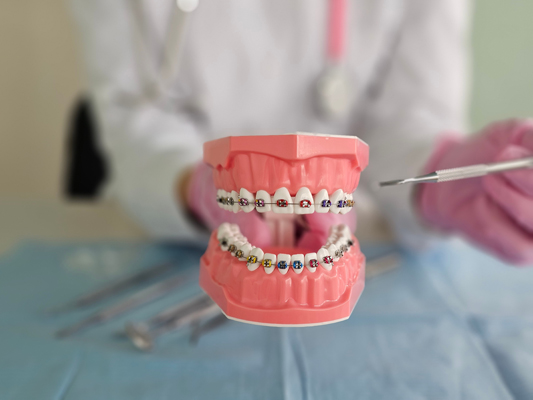
Traditional metal braces and Invisalign® are two of the most common options for teeth straightening. Continue reading to discover the differences between Invisalign and traditional braces. When deliberating between the two options, you might ask questions about their effectiveness and cost. However, the goal is to choose the treatment option that would get the best results.
An overview of Invisalign vs. traditional braces
The fact that Invisalign aligners are removable and undetectable makes it popular among patients looking to straighten their smiles discreetly. This feature allows patients to take the aligners out to eat, brush, and floss, as well as for special occasions. There is no dietary restriction since these aligners are detachable. This also removes the concern about broken brackets or loose archwires, as with braces.
The transparent plastic trays are practically invisible on the teeth, and treatment may involve as few as 12 or as many as 48 trays, depending on the extent of tooth movement required. The orthodontist will provide guidelines on how and when to use the aligners. The average length of Invisalign therapy is six to 18 months, although this varies from patient to patient. This depends on a patient's commitment to wearing the aligner for the recommended 20 to 22 hours each day since failure to do so may cause therapy to take longer.
Invisalign users should see an orthodontist every four to six weeks. With each appointment, the orthodontist will be able to monitor the progress. To ensure the teeth keep moving, patients will swap their aligners every one to two weeks. This is a crucial step in the straightening procedure. Treatment may be delayed if a patient misses visits or forgets to change aligners on time.
How are braces different?
Braces are still the most popular option for teeth straightening, considering they existed long before Invisalign was introduced. Braces are not removable, which is the most apparent difference between them and Invisalign. They are, nevertheless, very effective with resolving complicated problems and sometimes work more quickly than Invisalign.
While treatment times vary from patient to patient, braces often take anywhere from 18 months to three years to complete. However, patients will usually notice indications of progress very quickly. The treatment duration with Invisalign is shorter compared to braces.
The quantity of care required for braces is one factor that makes some individuals avoid this option. Patients need to avoid certain meals and visit the orthodontist regularly to adjust the brackets and wires from time to time. Brushing and flossing are also less fun with wires and brackets standing in the way. The good news is that there are a variety of accessories available to aid oral hygiene regimens.
Ready for a straighter smile?
Regardless of which treatment method you select, both braces and Invisalign can correct misalignments while enhancing the smile and oral health. This is a big choice, so it is advisable to discuss it with an orthodontist who has experience with both Invisalign and traditional braces. They will help you decide the most suitable method to straighten your teeth and get the smile you desire.
Request an appointment or call Precision Orthodontics & Pediatric Dentistry at 703-391-8800 for an appointment in our Reston office.
Recent Posts
Maybe you want to straighten your teeth, but you are looking for a more discreet method like Invisalign®. These aligners have exploded in popularity because they are a less obvious way to correct misaligned teeth. Many people with alignment issues who were unsure about braces have now embraced Invisalign. You might be on the fence…
You may know that Invisalign® is different than traditional braces, but you may not know all the reasons why. Both Invisalign and traditional braces straighten your teeth and correct other issues, but in very different ways. For many, Invisalign aligners are a great choice to straighten the teeth without visible brackets and wires. There are…
One question you may have is what you can eat and drink while using Invisalign®. Most people know that patients who get braces cannot eat and drink certain foods. People wonder if it is the same for Invisalign. One big potential detractor for many who want to straighten their teeth is feeling like they cannot…