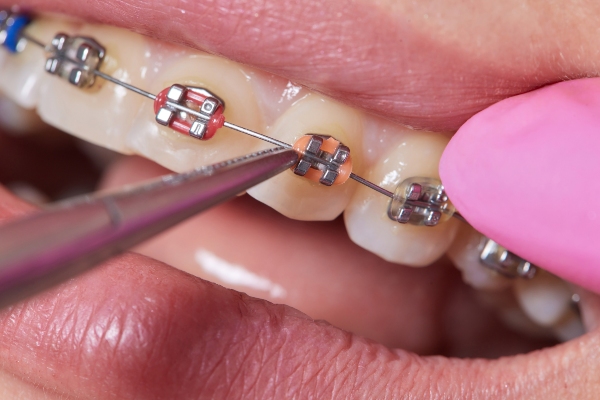
Braces are used to address myriad oral health concerns, including but not limited to overcrowding, gaps between teeth (i.e., spacing concerns), and crooked teeth. They can also address bite complications like underbites, overbites, and crossbites. In this review, we look specifically at how braces can fix overcrowding and spacing issues in patients of all ages.
Braces for overcrowding and spacing: Here is what you should know
Whether a patient chooses traditional metal braces, ceramic braces, or lingual braces, they can expect desirable results in less than two years when correcting overcrowding or spacing issues. Here is everything to know about braces, including what they are, how the process works, and what results patients can expect for the long term.
What are braces?
Braces involve the use of brackets and wires; they are typically made of metal, but ceramic braces may also be an option. The brackets attach to the visible surfaces of the teeth, and a metal wire runs through each bracket. The dentist then tightens the wires, which shift teeth into the proper alignment and positions.
What are overcrowding and spacing?
Overcrowding refers to teeth that are too close together. This is often the result of a jaw that is not wide enough to support the growth of all teeth. Other causes, such as the growth of wisdom teeth (third molars), may also contribute to overcrowding concerns. Overcrowding can be a cosmetic concern for many individuals, and it can increase the risk of cavities and other oral health concerns, particularly in the areas of teeth that are hard to reach while brushing.
Spacing or gaps between teeth can occur when the jaw is too wide for all the teeth. A missing tooth may also cause a spacing concern.
How effective are braces for overcrowding and spacing in the long term?
Braces are highly effective in the long term. Patients can typically achieve the desired results in less than two years. After the patient gets their ideal smile, they can maintain their results by wearing their retainer as directed by their dentist.
How can I determine if braces are right for me?
Braces can work for even the most severe overcrowding or spacing concerns. Alternative treatments, such as clear aligners and dental veneers, cannot treat most severe cases. It is best for a patient to visit a licensed dentist for a consultation to determine which treatment option is right for them. The dentist can discuss the pros and cons of all treatment options and explain the various types of braces for overcrowding and spacing in more detail.
Are you considering braces to fix overcrowding or spacing issues?
Braces are a good treatment option for anyone who has spacing or overcrowding concerns. If you (or your child) are dealing with any orthodontic problems and would like to consult with a licensed and experienced dentist about treatment, contact us today to schedule a convenient time to come in for a visit.
Request an appointment or call Precision Orthodontics & Pediatric Dentistry at 703-391-8800 for an appointment in our Reston office.
Recent Posts
Your orthodontist has many options and approaches available to straighten your teeth and correct other issues. You can have peace of mind to know that each solution can be effective and help you to achieve a new smile. You can then feel good about your appearance and have more self-esteem. If part of your treatment…
Can treatment from an orthodontist help with daily functions such as speaking and chewing? Read on to learn more. Bite correction from an orthodontist has several health benefits, including enhanced aesthetics, clearer speech, and improved chewing, biting, and jaw functions. This type of dental specialist can help you figure out whether your bite is misaligned…
An orthodontist might recommend devices like braces or clear aligners to help straighten your teeth. Both of these appliances work by applying a gentle, constant force on teeth, slowly moving them to a better position over the course of your treatment. Orthodontic issues are pretty common, and the American Association of Orthodontics states up to…