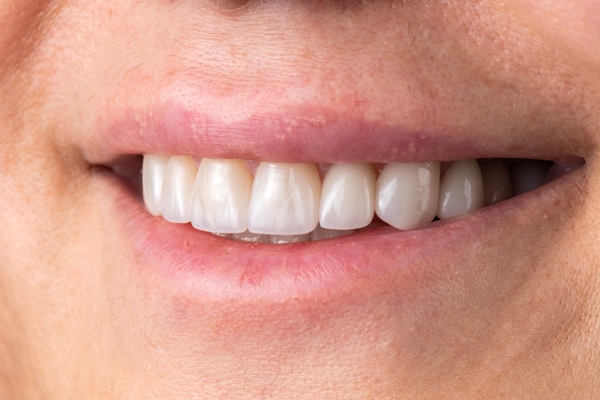
Orthodontists are dental specialists who focus on malocclusions, or dental misalignments, that cause problems with the teeth, jawbones, and overall oral function. They often come into a patient's life through the referral of a general dentist or other dental professional. Considering these professionals primarily focus on the overall health of each tissue in the mouth, they need help if teeth twist into certain positions or underlying structures are misaligned.
Assessment from an orthodontist
In order to determine the most appropriate treatment plan, patients must undergo a consultation with the orthodontist. The orthodontist and their team will perform an in-depth evaluation, complete with:
- Digital scans. Using the advanced technology, the orthodontic team will scan and measure the teeth, gums, roof, and floor of the mouth to create a custom model.
- Impressions. Patients will bite into a mold comprising alginate and elastomer materials to create a custom mold, usually only performed if digital scans are not.
- Physical examination. The orthodontist will use a dental probe and mirror to assess the health of the teeth and gums, as well as different bite tests to check alignment.
- Photographs. Patients will stand in front of a bare wall so the team can take front-and-side facing photos to assess their facial symmetry.
- X-rays. These images allow a better view of teeth that may be trapped under the gum line, teeth' roots, and the entire position of each tooth.
Types of malocclusions
The evaluation can uncover the presence and severity of various malocclusions. The most common include:
- Crossbites. The lower jaw is longer or larger than the upper jaw.
- Cleft palate. The two plates in the palate (roof of the mouth) did not fuse properly.
- Misplaced midline bite. The center of the upper front teeth is mismatched with the center of the lower teeth.
- Openbite. The top and bottom teeth do not connect when biting down.
- Overbites. The upper teeth stick out too far over the bottom teeth.
- Overcrowding. There is not enough space for the teeth, causing them to crowd or overlap.
- Spacing issues. The teeth are spaced too far apart in some areas, also known as diastema.
- Underbites. The bottom teeth jut out past the upper teeth.
Patients can experience multiple types of malocclusions at once. Therefore, an orthodontist will work to tailor a treatment for each patient to remedy the side effects.
Effects of malocclusions
Whether the patient is a child or an adult, malocclusions can cause a ripple effect. Depending on the type and severity of the malocclusion, it can negatively impact a patient's aesthetic, oral health, chewing function, speech, breathing, and sleep patterns. Naturally, more problems will follow, including self-esteem issues, possible oral infections, bad breath, poor digestive function, and heartburn. Communication may also suffer, considering the teeth and jaws are a large part of how patients form their words. Further, conditions that impact how one breathes can lead to sleep apnea, which restricts oxygen to the brain.
Moreover, certain conditions can cause the structure of the face to become asymmetrical. In such cases, the orthodontist will want to begin treatment early, especially in children. However, some patients may require the services of an oral surgeon in addition to the orthodontist.
Orthodontic appliances
Fortunately, orthodontists can treat most malocclusions and subsequently remedy their side effects. They use many tools or appliances to realign teeth and jaws, the most common and possibly well-known being braces. Braces have different types, but they all work with brackets, wires, and rubber bands to force the teeth into a new position over time. They can comprise metal or ceramic materials. Patients with a metal-specific allergy should alert the orthodontist to consider alternatives.
Another popular option is clear aligners—often considered a discreet alternative to braces. They are clear, custom, removable trays comprising medical-grade plastic. Patients wear these aligning trays for at least 22 hours daily as they apply constant, gentle pressure to the gums and teeth. As the teeth change position, approximately every two weeks, patients return to the orthodontist's office to receive new custom trays. The cycle repeats until the treatment is complete.
Palatal expanders are common for children with cleft palates with the ability to be removable or fixed. These appliances work by applying a gentle yet steady force on each side of the palate. Both plates will slowly be pushed apart, effectively widening the jaw over time. This force and the new position of the plates allow new bone to regenerate and fill the space between the plates, eventually decreasing the need for the expander.
Schedule a consultation
There are more orthodontic appliances than mentioned above, and Precision Orthodontics & Pediatric Dentistry has them. If you or a loved one need the services of an orthodontist, contact our office. We proudly serve residents in and around the Reston area.
Request an appointment here: https://www.orthodonticprecision.com or call Precision Orthodontics & Pediatric Dentistry at (703) 391-8800 for an appointment in our Reston office.
Check out what others are saying about our dental services on Yelp: Orthodontist in Reston, VA.
Recent Posts
An orthodontist typically offers clear aligner treatments for patients that want a reliable and discreet way to straighten their smile. This blog post discusses some of the more frequently asked questions that orthodontists receive regarding clear aligners and the benefits they can provide. Read on to learn more about clear aligners.Some of the more frequently…
An orthodontist fills a critical role when crooked teeth, bite dysfunctions, and other issues affect your smile. If you are unhappy with the way your teeth work, braces might be the right option. Having crowded teeth is another condition that you may struggle with. This can have both cosmetic and health implications. You can find…
With the help of an orthodontist, even the most troubling orthodontic conditions do not have to permanently ruin your smile. One of the most common conditions that these professionals treat is an underbite. If you have one, you may feel embarrassed about smiling. You may even have pain and discomfort. But you do not have…
Have you put off a trip to the orthodontist because you are worried that you are too old? Do not think that orthodontic treatment is only for children and teens. No matter how old you are, there are treatments available to change your smile. You can be happy with the way you look and have…