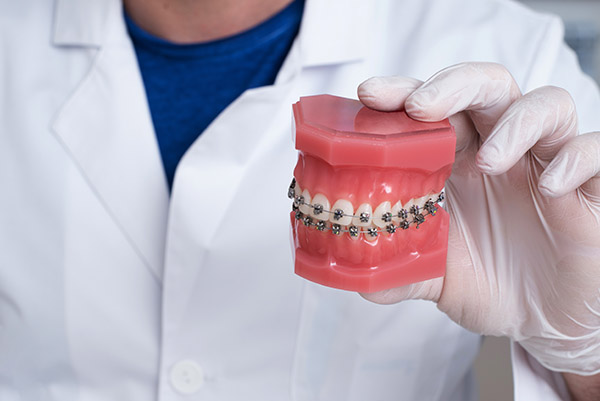
Wearing braces gives you a lot to think about leading up to and during the treatment. The process can be successful and produce the results you want. Whether you have crooked teeth, bite problems, or a crowded mouth, you can soon have a new smile. However, there are some important guidelines to follow during this period. You need to be mindful of what you eat so your braces can stay intact and do their job.
How braces work
Though various methods are available to straighten teeth, braces remain popular and effective. Traditional braces consist of metal brackets and wires, along with elastic bands. The brackets attach to the teeth with dental cement, and wires go through them. The elastics hold the wire in place. Together, these components put pressure on the teeth, forcing them to move into the right positions.
The treatment period will vary depending on the severity of the patient’s alignment problems. Usually, a patient will wear them for 18 months to two years. During the treatment, the patient will go into the orthodontist’s office every few weeks for adjustments. The patient should also be diligent about maintaining good oral hygiene while wearing braces.
Hard foods, crunchy foods
There is an assortment of hard foods to avoid while wearing braces. These can be problematic, as they can damage the wires and brackets. Biting into hard food can break a bracket off a tooth, requiring the orthodontist to replace it. These foods include hard candy, ice, popcorn kernels, and nuts. Biting into certain vegetables and fruits can pose problems for the braces too. Chips, pretzels, and crackers can also damage braces.
Sticky foods
Certain sticky foods can cause problems as well. Chewing gum, gumdrops, and other candy such as taffy. Sticky items can get caught in the brackets of the braces, making them hard to remove. A sticky food might even pull off a bracket or remove the wire.
Chewy foods
While wearing braces, the patient should be cautious about eating sticky food as well. Examples include bagels, dense rolls, and pizza crusts. Chewy food can be difficult to get out of the brackets, even with effective brushing. It, too, can damage the components of the braces.
Sugary foods and beverages
Limiting the intake of sugar is always a good idea. It is especially important while wearing braces. Too much sugar will increase the risk of tooth decay. Brushing at least twice a day will remove plaque from the teeth and prevent the formation of tartar. However, it is more difficult to brush effectively during treatment with braces. Eat candy and sweet, and drink soda in small amounts.
Your diet makes a big difference during your treatment
When you get braces, your orthodontist will give you a list of foods to stay away from or limit. Follow these guidelines closely. Doing so will cut down on the chances of you damaging the brackets and wires. You can also keep the braces clean and prevent tooth decay.
Request an appointment or call Precision Orthodontics & Pediatric Dentistry at 703-391-8800 for an appointment in our Reston office.
Recent Posts
Your orthodontist has many options and approaches available to straighten your teeth and correct other issues. You can have peace of mind to know that each solution can be effective and help you to achieve a new smile. You can then feel good about your appearance and have more self-esteem. If part of your treatment…
Can treatment from an orthodontist help with daily functions such as speaking and chewing? Read on to learn more. Bite correction from an orthodontist has several health benefits, including enhanced aesthetics, clearer speech, and improved chewing, biting, and jaw functions. This type of dental specialist can help you figure out whether your bite is misaligned…
An orthodontist might recommend devices like braces or clear aligners to help straighten your teeth. Both of these appliances work by applying a gentle, constant force on teeth, slowly moving them to a better position over the course of your treatment. Orthodontic issues are pretty common, and the American Association of Orthodontics states up to…