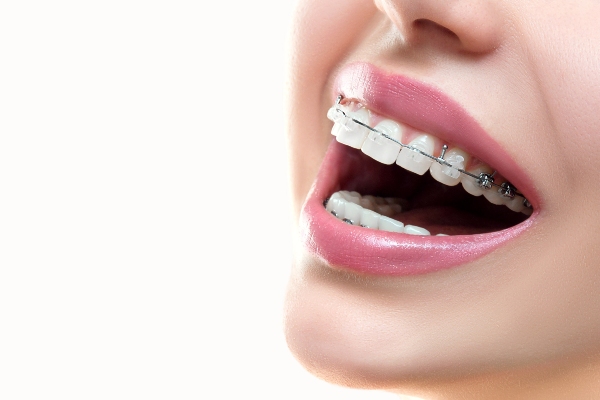
Everyone deserves a smile that makes them feel confident, and for many patients, braces are a way to achieve a more symmetric smile and address aesthetic concerns. This review provides answers to common questions about braces treatment. It should help you decide if braces treatment is right for you (or your child).
Common braces FAQs
It helps to have as much information as possible before starting a dental treatment. Many patients often have questions about the different types of braces that are available, if braces are even necessary, if they can wear them as adults, and what to expect during and after treatment. Let us take a closer look at five most common braces FAQs.
What are the different types of braces?
The type of braces that a patient can choose depends on their experience. A notable difference relates to how the braces are placed on teeth. Metal and ceramic braces, for instance, are attached to the front surfaces of the teeth, whereas lingual braces are attached to the backs of the teeth. There are several primary types of dental braces:
- Metal braces
- Ceramic braces
- Lingual braces
- Clear aligners
Do note that clear aligners are not braces, but rather an alternative to them. Unlike braces, they cannot correct severe misalignment concerns. They are also removable, whereas braces are fixed and can only be removed by a dentist.
When are braces necessary?
Braces are strongly encouraged for anyone who has teeth or jaw alignment concerns. The best way to determine if braces are right for a patient is for them to visit a licensed dentist who offers this treatment. Notably, braces may be recommended if the patient has any of the following:
- Crooked teeth
- Overcrowding
- Spacing issues (e.g., teeth gaps)
- Bite complications (e.g., underbite, overbite, etc.)
Can adults wear dental braces?
Braces are commonly associated with pre-teens and teenagers because dentists typically recommend orthodontic care as early as possible after the permanent teeth emerge. However, dental braces are also available to adults of all ages.
How long does braces treatment last?
Braces treatment takes anywhere from six months to more than two years. The length of treatment depends on the severity of the malocclusion and how well the patient follows the plan. Most patients see desired results in 15 to 21 months.
Do the results from braces last for the long term?
The results from braces can last for a lifetime. However, patients are required to wear a retainer after the braces treatment is complete. This helps keep the teeth from shifting back to their original positions, which is likely to happen if the patient does not follow the aftercare plan correctly. Regular visits to the dentist for check-ups and cleanings are also necessary to maintain a clean and straight smile for the long term.
Find out if braces are right for you during a consultation visit
Contact us via phone or message to schedule a consultation. During your visit, we can discuss your orthodontic care needs and put together a treatment plan to help you reach your goals.
Request an appointment or call Precision Orthodontics & Pediatric Dentistry at 703-391-8800 for an appointment in our Reston office.
Recent Posts
Your orthodontist has many options and approaches available to straighten your teeth and correct other issues. You can have peace of mind to know that each solution can be effective and help you to achieve a new smile. You can then feel good about your appearance and have more self-esteem. If part of your treatment…
Can treatment from an orthodontist help with daily functions such as speaking and chewing? Read on to learn more. Bite correction from an orthodontist has several health benefits, including enhanced aesthetics, clearer speech, and improved chewing, biting, and jaw functions. This type of dental specialist can help you figure out whether your bite is misaligned…
An orthodontist might recommend devices like braces or clear aligners to help straighten your teeth. Both of these appliances work by applying a gentle, constant force on teeth, slowly moving them to a better position over the course of your treatment. Orthodontic issues are pretty common, and the American Association of Orthodontics states up to…