An Orthodontist Answers Gaps in Teeth FAQs
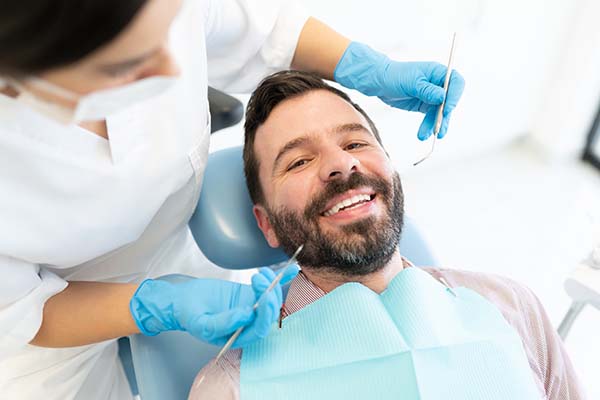 An orthodontist can help you to close up abnormal spaces between your teeth. The condition is termed diastema, and it ruins the appearance of your smile. Large spaces between teeth are normal for children, but these spaces normally close up as their remaining teeth erupt.
Spaces between an adult’s teeth can be the result of an orthodontic problem. Some people choose to leave them unaddressed, particularly if it only affects their front teeth. An orthodontist can help those who would rather have the gap closed.
Our orthodontist answers FAQs about gaps between teeth
Dealing with a large space between your teeth? Here are the answers to some of the questions you might have:
1. What causes diastema?
There are various reasons why a person might develop an abnormal space between their teeth. In some cases, it might result from their jaw being too big, while others develop the condition due to their teeth being too small. Genetics often plays a role in the size of a person’s jaw and teeth, so the condition might be hereditary. Gum disease can also lead to spaces forming between teeth since it damages bone and gum structures in the mouth. Habits like tongue-thrusting and thumb-sucking can also lead to diastema.
2. What occurs if I don’t get the gap between my teeth fixed?
For the most part, nothing. Spaces between a child’s teeth typically close up by the time all their adult teeth emerge. Most people who seek treatment for diastema that affects their front teeth typically do so for cosmetic reasons. However, gaps between posterior teeth can turn into a food trap, making the teeth surrounding them more vulnerable to decay.
3. How does an orthodontist treat diastema?
There are a variety of treatment options that can lead to diastema. Treatments are usually recommended based on the root cause of the patient’s condition. Some of the ways a dentist might opt to address a large space between a patient’s teeth include:
- Orthodontic appliances: Diastema caused by poor teeth alignment can be fixed with orthodontic devices like braces. These devices exert pressure on the patient’s teeth, slowly pushing them into a better position and closing up abnormal spaces between them. Treatment times with these devices can be anywhere from 12 to 36 months
- Composite bonding: Gaps between teeth can be closed up by applying composite resin to the area. The composite can be used to increase the bulk of the two teeth closest to the gap, closing it up. It is a non-invasive procedure that is completed during a single dental visit
- Crowns: Dental crowns can be used to provide a more permanent cosmetic fix for diastema. The two teeth closest to the gap have oversized crowns placed on them, closing up the space between them. It provides a long-term solution that can last for up to 25 years
We can fix your smile
Diastema can ruin the way your smile looks, regardless of how healthy your teeth are. Call or visit our Reston clinic to set up an appointment with our orthodontist.
Request an appointment or call Precision Orthodontics & Pediatric Dentistry at 703-391-8800 for an appointment in our Reston office.
Recent Posts
Your orthodontist has many options and approaches available to straighten your teeth and correct other issues. You can have peace of mind to know that each solution can be effective and help you to achieve a new smile. You can then feel good about your appearance and have more self-esteem. If part of your treatment…
Can treatment from an orthodontist help with daily functions such as speaking and chewing? Read on to learn more. Bite correction from an orthodontist has several health benefits, including enhanced aesthetics, clearer speech, and improved chewing, biting, and jaw functions. This type of dental specialist can help you figure out whether your bite is misaligned…
An orthodontist might recommend devices like braces or clear aligners to help straighten your teeth. Both of these appliances work by applying a gentle, constant force on teeth, slowly moving them to a better position over the course of your treatment. Orthodontic issues are pretty common, and the American Association of Orthodontics states up to…